

The objective of human centric automation, which refers to the close integration of human labor with automation technology, is to deliver additional value-added services that motivate firms to become more robust, flexible, and efficient.
1. What is the majority of manufacturers?
The majority of manufacturers are now aware of Industry 4.0 and are actively involved in it. Industry 4.0 uses automation, data analysis, and Internet of Things (IoT)-based technologies to maximize industrial productivity. Building on this base of sensors, automation, and big data, the Fifth Industrial Revolution (Industry 5.0) emphasizes automation centered on people.
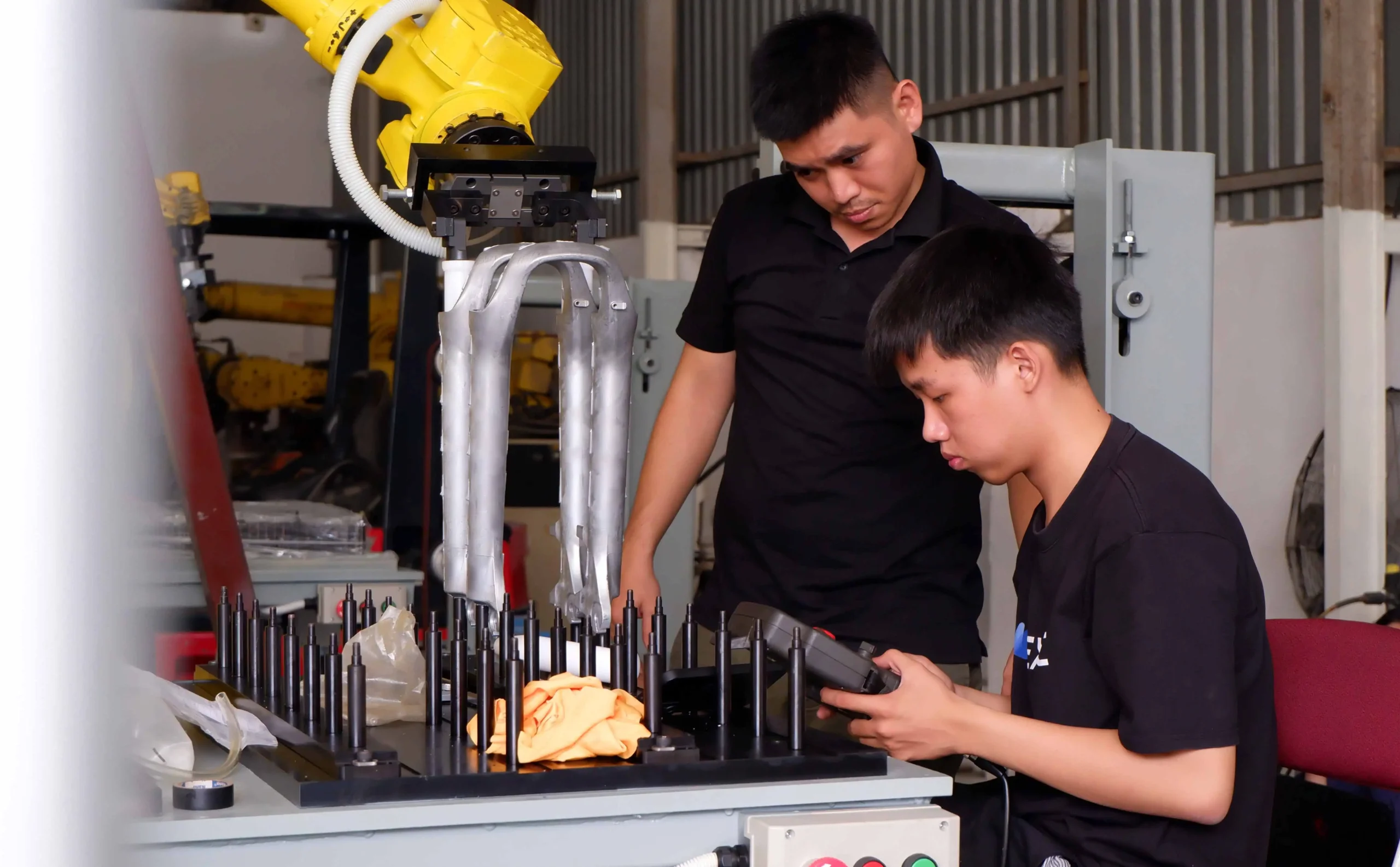
A new phrase, “human-centric automation,” refers to the close integration of automated systems’ efficiency and human operators’ intelligence to minimize mutual limitations and enhance manufacturing process performance and customer and employee satisfaction. Humans can be strong at solving complicated problems and having innovative ideas, but they can also be limited by physical harm, boredom, and exhaustion.
Automation technologies offer benefits such as speed and precision, but they also have drawbacks, including the inability to perform complex tasks or those that require quick problem resolution. In an effort to overcome flaws, human-centric automation seeks to blend human and robotic capabilities, aiming to enhance not only the production process but also the experiences of customers and employees.
In human centric automation, human operators focus on the engineering, programming, monitoring, control, and maintenance of automation technologies to make prompt decisions and develop solutions that improve process efficiency, quality, and accuracy, as well as business resilience. Lower-skilled employees will develop engineering and programming skills as part of the human-centric strategy, increasing their value to the company and making manufacturing more flexible.

2. Communication between human workers and automated machinery
Anticipated developments in virtual reality, machine learning, artificial intelligence (AI), and networking will build on current Industry 4.0 technologies, enabling improved collaboration and communication between human workers and automated machinery.
More manufacturing resiliency can be achieved when humans and automated equipment work together to analyze problems, find solutions, and communicate, control, and collaborate more effectively. Humans can handle complex issues involving supply chain disruptions, process changes, and customized orders, and then operate the automation to guarantee that the process complies with requirements.
Building on the technological foundation of Industry 4.0, Industry 5.0 seeks to promote human creativity better, boost work happiness, and adapt to shifting production dynamics toward more personalized goods, all while increasing productivity and improving financial performance. Put another way, Industry 5.0 recognizes the value of human complexity, critical thinking, and creativity, and uses them to improve the accuracy and efficiency of robots, rather than concentrating on how quickly automation can mass-produce a product without human assistance.
The ultimate goal is to attract and retain skilled workers, provide manufacturing resiliency and agility, and satisfy customers who demand a more personalized product.
3. Tools for human centric automation today
The goal of human-centric automation is to enable more meaningful collaboration between people and automation. As a result, Industry 4.0’s digital and automated technologies will be crucial for providing real-time data to increase productivity while delivering more useful, tailored products.
The following technologies may be major players in Industry 5.0:
3.1 Collaborative Robots
Collaborative robots, which are already designed to operate safely alongside manual laborers, increase production and process accuracy rapidly. Collaborative robots, with their innate speed and precision, will augment human creativity, problem-solving abilities, and craftsmanship in a human-centric manner, enabling even handcrafted or bespoke things to be produced in larger quantities.
Collaborative robots offer increased agility and flexibility on the manufacturing floor by collaborating with human operators to adapt to production changes and quickly acquire new skills.
3.2 Intelligent Sensors
Human workers may effortlessly and precisely monitor processes and equipment and make necessary modifications by utilizing intelligent sensors that are integrated into the machinery or process. Collaborative robots can benefit from sensors as well, since they can be used in conjunction with machine learning technologies to aid training and improve agility and flexibility while operating in close proximity to human operators.
3.3 Advanced Data Analytics
Operators will continue to get actionable data from data analytics systems, and they will be urged to apply sophisticated problem-solving techniques to identify problems in the production process and take corrective action to bring it back in line with specifications. Additionally, human operators can be informed by advanced analytics about problems with production machinery or the supply chain that could affect throughput.
Human workers can work with equipment to adapt to required modifications and use this knowledge in conjunction with their own intellect and experience to identify what steps need to be taken to correct the issue. In order to forecast seasonal or customized product needs, which can necessitate alterations to the production schedule or the process itself, data analytics can also be utilized to assess client feedback.
3.4 Advanced Controls
Advanced controls and human-machine interfaces that readily interact with automated equipment in the event of an emergency, a change in production, or a process issue will make man-machine collaboration easier and more intuitive while fostering industrial agility.
3.5 Machine learning and artificial intelligence
To further promote human centric automation and cooperation between humans and machines, these cutting-edge technologies may be integrated into collaborative robots, conventional robots, and other automated equipment. Collaborative robots will find it simpler to identify problems, pick up on human operators’ instructions, and learn from human operators thanks to artificial intelligence and machine learning. Additionally, they may be utilized to enable required modifications to the manufacturing process by understanding and learning about the preferences and expectations of the client.
Industry 5.0, with its human-centric approach to automation, can help manufacturers stay competitive as they strive to meet traditional efficiency goals while building upon existing technologies to boost employee satisfaction, provide customers with customized products, and increase manufacturing agility. Manufacturers are already facing challenges in retaining employees while maintaining high levels of efficiency and throughput.
📞 If you are looking for solutions for robotic applications in machine work, please get in touch with ROBOTNEXT, a unit specializing in the design, construction, and integration of industrial robot arms such as ABB, FANUC, YASKAWA in Vietnam.
Technical consulting hotline: 0909 914 837
Read more: Robotics Plastic Injection Machine Project
